
Maryland Release Events and Records
A Maryland release can mark several different legal events. A county jail may release a pretrial detainee on bond, after a court order, at time served, or into another agency's custody. The Division of Correction may release a sentenced person on parole or mandatory supervision, discharge a person at maximum sentence expiration, or transfer the person to another custodian. Work release, home detention, and other provisional arrangements may place someone outside a secure unit while restrictions remain. Physical exit, sentence status, and supervision status are separate facts.
The record holder follows the event. County correctional agencies keep local booking and release material. The Maryland Department of Public Safety and Correctional Services, known as DPSCS, keeps state commitment, sentence, and release records. The Maryland Parole Commission keeps parole material, while the Division of Parole and Probation handles community supervision within its authority. A court clerk holds the order that authorized many releases. None of those records should be replaced with a guess based on a blank search screen.
The DPSCS agency overview identifies the cabinet department that contains Maryland's correctional divisions.
That agency structure matters because DOC, parole decisions, supervision, and local jail records do not come from one office.
- Release
- A physical exit from one custodian, which may lead to the community or another custodian.
- Parole
- Conditional release approved by the Maryland Parole Commission before the full sentence expires.
- Mandatory supervision
- Conditional release produced by applicable diminution credits, with legal custody continuing to sentence expiration.
- Discharge
- The end of the custodial sentence at its maximum expiration, absent another legal authority.
- Detainer
- A request or legal hold that can send a person to another agency instead of the community.
Maryland Release Types Explained
Maryland records use terms that signal who authorized an exit and what follows it. Parole is discretionary. The Maryland Parole Commission may approve it, but conditions such as an approved home plan or required programming can delay the actual exit. Mandatory supervision is different. Under Correctional Services Section 7-501, qualifying people serving more than eighteen months are released after the term is reduced by applicable credits, subject to statutory limits. Section 7-502 keeps them in legal custody through the full term.
A court-ordered release may follow bond, reversal, sentence modification, or time served. The order proves authority, not the exact moment staff finished processing. Transfer has an even sharper distinction: a move from a county jail to DOC, BOP, ICE, another county, or treatment custody is continued custody. Escape also causes the public state locator to omit a person, but it is not a lawful release. The terms must be checked against the actual custody and court records.
| Event | What it means | Best confirming record |
|---|---|---|
| County release | Exit on bond, court order, time served, or another local basis | County release entry and court order |
| Parole | Conditional release approved by MPC | Parole order, VINE event, and custody release record |
| Mandatory supervision | Conditional release based on sentence credits | DOC written order and sentence computation |
| Maximum-expiration discharge | Sentence reaches its legal end | Computation, discharge record, and court file |
| Transfer | Custody moves to another agency | Transfer record and receiving-agency result |
| Provisional release | Temporary time outside direct custody with restrictions | Program or custody order |
Note: A parole approval or court order may come before the physical release, so record both the authority date and completed exit date.
Maryland Release Record Fields
A useful release record identifies the person, the event, and the agency responsible for it. At the county layer, fields may include booking number, release date and time, release reason, court case, bond or commitment information, and any transfer destination. County systems differ, and Maryland has no single form that makes every local field uniform. The statewide correctional layer may hold a commitment number, actual release event, maximum expiration date, mandatory-supervision projection, credit ledger, parole or supervision order, and receiving agency when the exit was a transfer.
The public DPSCS locator does not display that historical field set. It is built to help locate certain people who are now housed in covered state facilities. A state record request can seek an existing release event or computation, while a local request must go to the county or city custodian. A court docket may show the legal order and sentence, but it may not show the time when custody staff completed the exit.
| Field | What it can establish |
|---|---|
| Name and identifying number | Which person and custody record the entry concerns |
| Release date and time | When the custodian recorded the physical exit |
| Release authority or type | Bond, court order, parole, mandatory supervision, expiration, or another basis |
| Releasing facility | The jail, detention center, or prison that processed the event |
| Receiving agency | Whether the exit was a transfer rather than a community return |
| Maximum expiration | The sentence endpoint used to distinguish conditional release from discharge |
| Credit ledger | The awarded, revoked, restored, and applied diminution credits in a state computation |
| Supervision order | The conditions and agency that apply after conditional release |
Request Maryland Release Records
The Maryland Public Information Act covers existing public records, not custom research. For a state-prison event, use the DPSCS Public Information Act page and its fillable request form. A focused request can identify the person, DOC or commitment number, case number, last known facility, and an approximate date range. It can ask for the commitment and release event, actual date and type, receiving agency, maximum expiration date, projected mandatory-supervision date, credit ledger, recalculation history, and any public order or completion document that already exists.
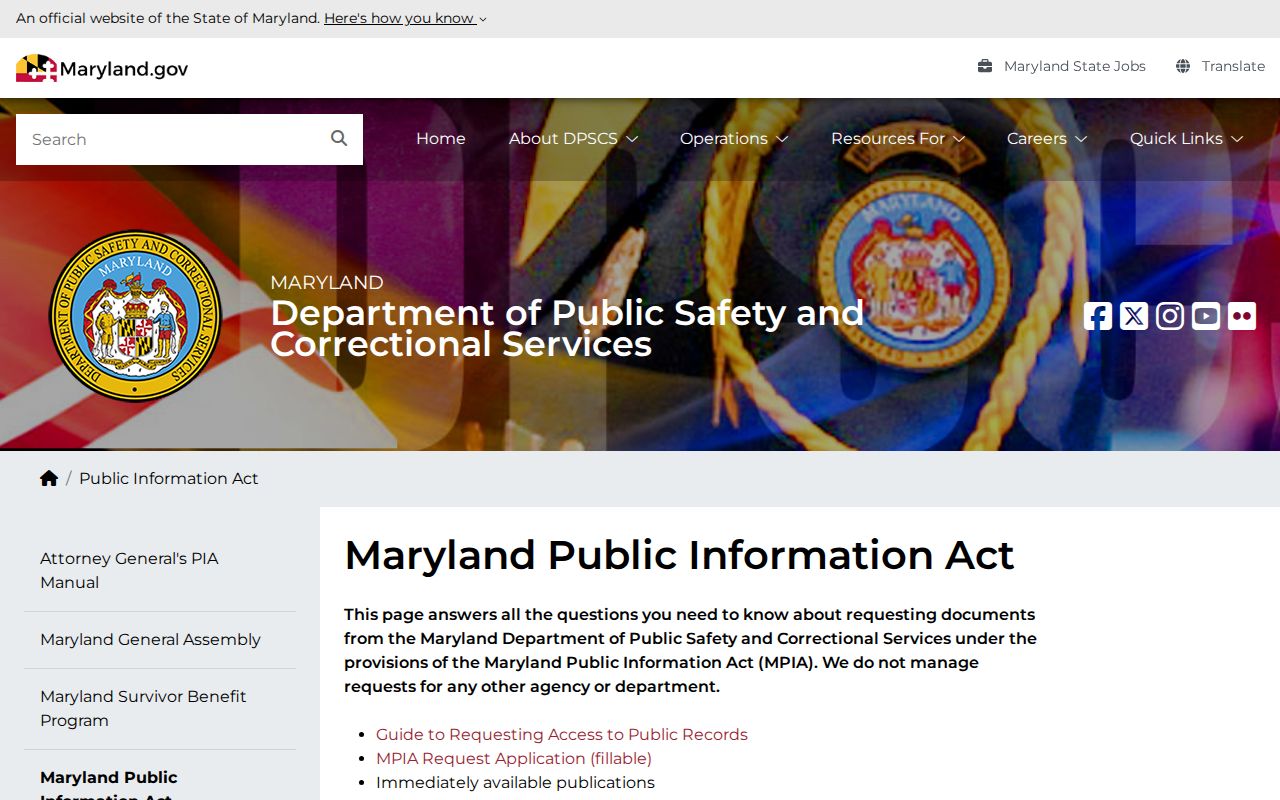
The request page also explains why medical, personnel, security, privileged, and investigatory material may be withheld or redacted.
DPSCS directs requests to its Public Information Act Coordinator, Office of Constituent Services, 6776 Reisterstown Road, Suite 212, Baltimore, Maryland 21215, or dpscs.pia@maryland.gov. The first two hours of search and preparation are free. The stated copy charge is fifty cents per page, with another fifty cents per page for certification, plus postage when applicable. Totals of one dollar or less are not charged. Ask for electronic delivery, segregable public portions, and a cost estimate before fees exceed a stated limit.
- Confirm whether the last custodian was a county jail, DOC, a court, BOP, or ICE.
- Name a person, case or commitment number, facility, date range, and the exact existing record sought.
- Send a local request to the county custodian or a state request to the DPSCS PIA coordinator.
- Request electronic copies, releasable portions, and advance notice above a chosen fee limit.
- Compare the returned release event with the court order, VINE notice, or receiving-agency record.
General Provisions Section 4-203 calls for a prompt grant or denial no later than thirty days. When production will take more than ten working days, the response must include required information about timing, cost range, and delay. A former detainee seeking their own base or medical file has a separate route through the institution of release or the DPSCS Case Management Office for Operations.
Maryland Release Records Under PIA
Maryland's Public Information Act appears in General Provisions Article, Title 4. Section 4-101 broadly defines a public record, and Section 4-201 states the general inspection right. That right has limits. Section 4-301 requires withholding when another law protects material. Section 4-351 addresses law-enforcement investigatory files and correctional security or intelligence records. A custodian may release an event date while redacting protected parts of the same file.
Expunged, shielded, sealed, juvenile, medical, victim, and other protected material may be unavailable. Maryland Judiciary Case Search is a remote summary rather than the full official file, and some favorable outcomes disappear from public display. The court clerk remains the source for a certified disposition or release order when access is lawful. No statewide retention rule in the research promises that every DOC release record stays public for a set period. The Maryland Parole Commission's reported five-year retention after maximum sentence expiration applies to the parole files and populations it describes, not to public locator visibility or every correctional record.
Records boundary: A request may obtain a release date or authority while protected medical, victim, security, personal, or investigative details remain withheld.
Note: Maryland’s PIA grants access to existing records but does not require an agency to create a new release list.
Maryland Booking Photo Record Limits
Maryland treats a police-held booking photograph as a type of investigatory public record, but access is not the same as automatic online publication. The state Attorney General’s 2007 booking-photo opinion says such a photo is generally available unless the custodian identifies a public-interest reason to withhold it. Privacy, an active case, protected records, and the facts of a request can still affect the result. A focused request should go to the police, sheriff, correctional unit, or other agency that created or holds the image.
Commercial Law §14-1324 addresses a narrower problem: a commercial site that charges to remove a police or court-related image. A person may demand free removal when the underlying record has been expunged, shielded or otherwise removed from public inspection, or the judgment was vacated. Ordinary release alone does not trigger that remedy, and the law is not a statewide ban on publication. This distinction keeps the release record separate from later limits on remote access or commercial display.
Why Maryland Released Inmates Vanish
Maryland's central released-inmate issue is the public locator's deliberate scope. The DPSCS Incarcerated Individual Locator says that people no longer in custody for any reason, including release or escape, are not listed. It does not retain a public released profile. It does not show a released or discharged label, actual release date, release type, supervision field, projected date, or historical retention window for a person who has left covered custody.
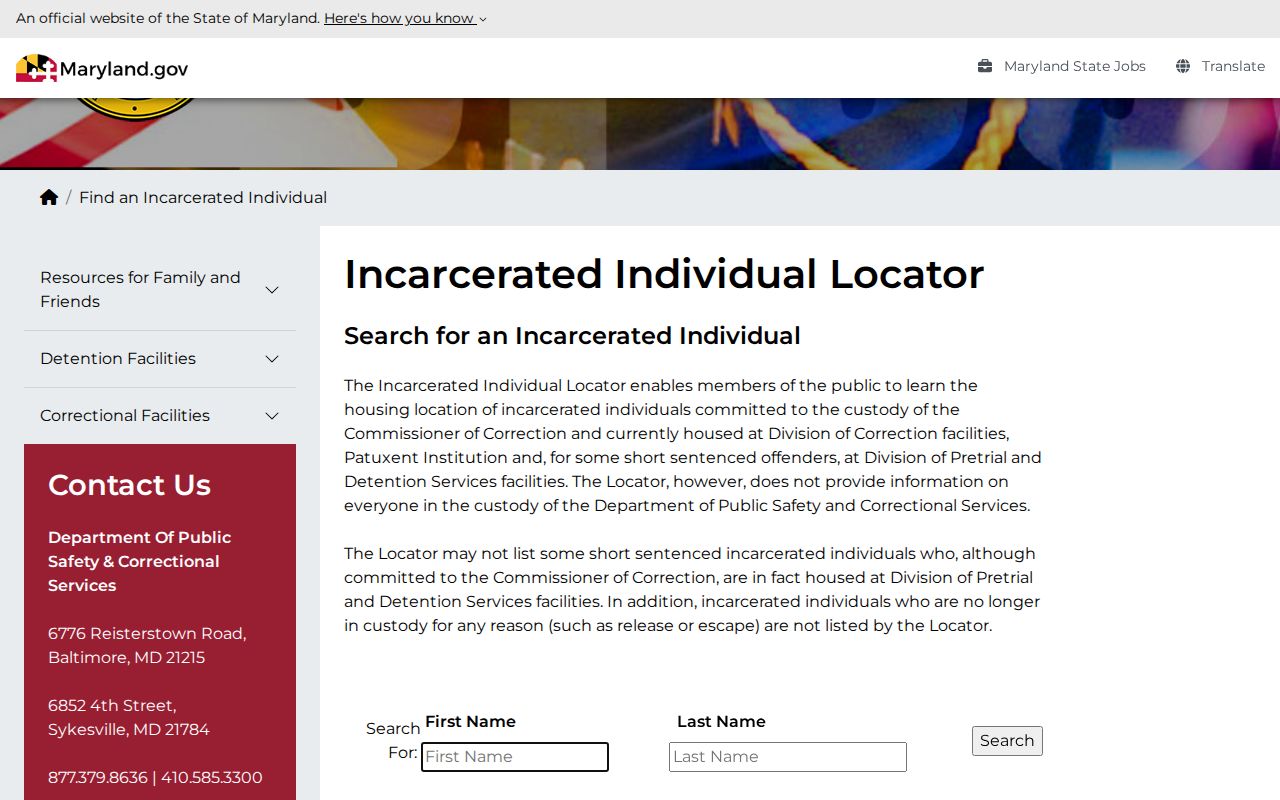
The warning turns a no-result into a reason to change sources, not a finding that release occurred.
A missing name can mean release, escape, a spelling mismatch, county custody, federal or immigration custody, or a population outside the locator's coverage. It can also mean that the person moved from a county jail into state custody but has not been found with the name used. Conversely, a current locator result supports covered state placement, not a future release date. Maryland released inmates therefore require a transition from a current-custody search to VINE, court, supervision, and records channels.
Do not infer release from absence. Confirm the completed event through a custody-change record, court order, receiving agency, or focused records request.
Search for Maryland Released Inmates
Start with the last location and legal system, not with a broad name search. A person last held in a county jail belongs first in that county's records and court lane. A person serving a state sentence belongs in the DOC and DPSCS lane. Federal sentenced custody belongs in BOP, while civil immigration detention belongs in ICE. This distinction prevents a transfer from being mislabeled as community release.
- Identify the last known jail, prison, court case, and approximate custody date.
- Use the DPSCS locator only to test whether the person is now in covered state custody.
- Search Maryland VINE and compare the name, identifier, source agency, location, status, and displayed date.
- Review Maryland Judiciary Case Search, then obtain the actual order from the clerk if the summary is incomplete.
- Check MPC and DPP records when parole, mandatory supervision, or probation may apply.
- Request the completed release, discharge, transfer, or computation record from the proper custodian.
The deeper DOC offender search route explains how the state locator fits into that chain. For a local custody event, the Maryland County Directory routes the request to the correct county or Baltimore City source. Those two links cover the two main layers without treating either as a complete statewide history database.
Does a court order prove the person left? It proves legal authority for release or transfer. Custody staff may process the event later, and another warrant or detainer can still control, so obtain the custodial exit record as well.
Maryland VINE and Court Checks
Maryland VINE is the strongest statewide bridge after a person disappears from a jail roster or the state locator. The Maryland VINE portal offers a person search and notification channels for described custody, court, protective-order, and parole or probation events. Search the exact name or an offered offender identifier, compare every visible identifier, then preserve the wording and date if a record reports release. A facility change may be a transfer.

VINE can bridge systems, but users may need to search and register again when a case or person crosses a system boundary.
Maryland Judiciary Case Search may outlast a short custody stay. Search exact names and match date of birth, jurisdiction, and case. Its FAQ permits a trailing percent sign after the start of a first or last name, but not at the beginning or middle of a word. More than five hundred results must be narrowed, and the public session can time out after two minutes of inactivity. Review bond, disposition, sentence, commitment, modification, probation, and docket events. Then request the underlying order from the clerk when formal proof matters.
VINE registration and written DPSCS Victim Services registration are separate. Phone registration uses a four-digit PIN, and the automated call may repeat for up to forty-eight hours until the PIN and pound sign are entered. Email uses no PIN. Registration may need to be repeated after a county-to-state transfer, District-to-Circuit movement, or entry into community supervision.
Note: A VINE release entry describes an event supplied by its source; use the court or agency record to establish the legal release type.
Federal Release Checks from Maryland
A Maryland custody trail can cross into federal systems. The BOP Inmate Locator covers federal records from 1982 forward and may retain a former-prisoner entry with a release date and wording such as released or not in BOP custody. It can be searched by name or a federal register, DCDC, FBI, or INS number. BOP warns that dates can change, and a federal pretrial defendant held for the U.S. Marshals may not yet have a useful BOP result.
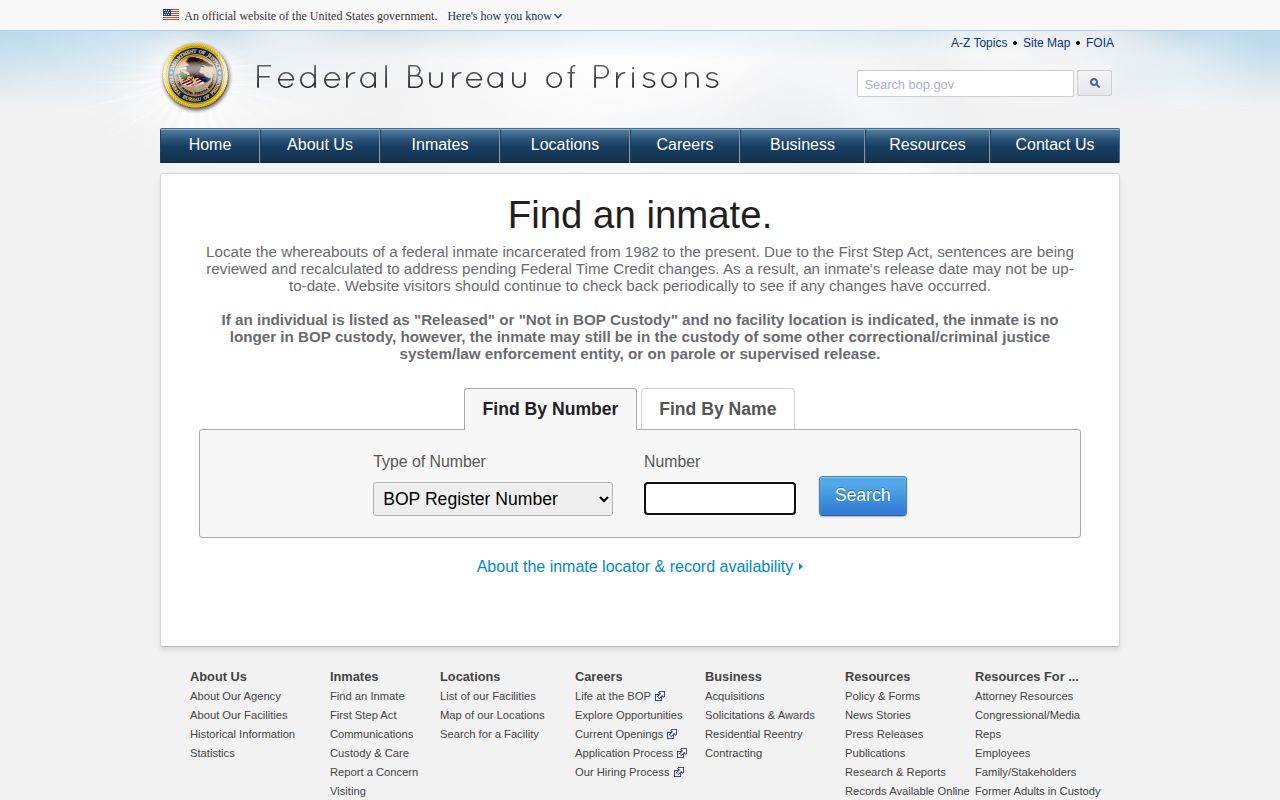
A former BOP result resolves only the federal prison relationship and does not rule out Maryland, local, immigration, or supervision authority.
Use the ICE Online Detainee Locator System when a jail exit may have led to civil immigration detention. It provides an A-number and country-of-birth route, plus an exact-name, date-of-birth, and country-of-birth route. ICE describes current and recently released records within its stated scope, but the system does not cover everyone. A county or DOC release cannot rule out transfer to ICE, and a blank ODLS result may require the agency's reporting line or field-office channel.
Note: A release from one system proves only that custody relationship and does not rule out a transfer or detainer.
Maryland Custody Has Two Layers
Maryland's correctional geography is unusual. Counties operate most adult local detention centers, yet Baltimore City's main adult booking and pretrial institutions are operated by DPSCS. The Division of Correction runs state prisons across the Allegany, Hagerstown, Jessup, Baltimore, Carroll, and Eastern Shore areas. Patuxent Institution has a specialized correctional and treatment role. FCI Cumberland is federal. One statewide request cannot retrieve every local release because control follows the agency and facility type.
A work-release or community-corrections site is not the same as a sentenced prison. A police processing room may release someone after a commissioner's order without creating a prison discharge. A county jail can send a person to DOC, which is continued confinement. Juvenile detention has a separate hard boundary: authorized DJS, court, family, and counsel channels apply, not adult locator inferences. Closed or proposed facilities also should not be read as active custody sites.
The DPSCS Community Releases dashboard separates community returns from transfers and deaths and includes projections tied to home plans.
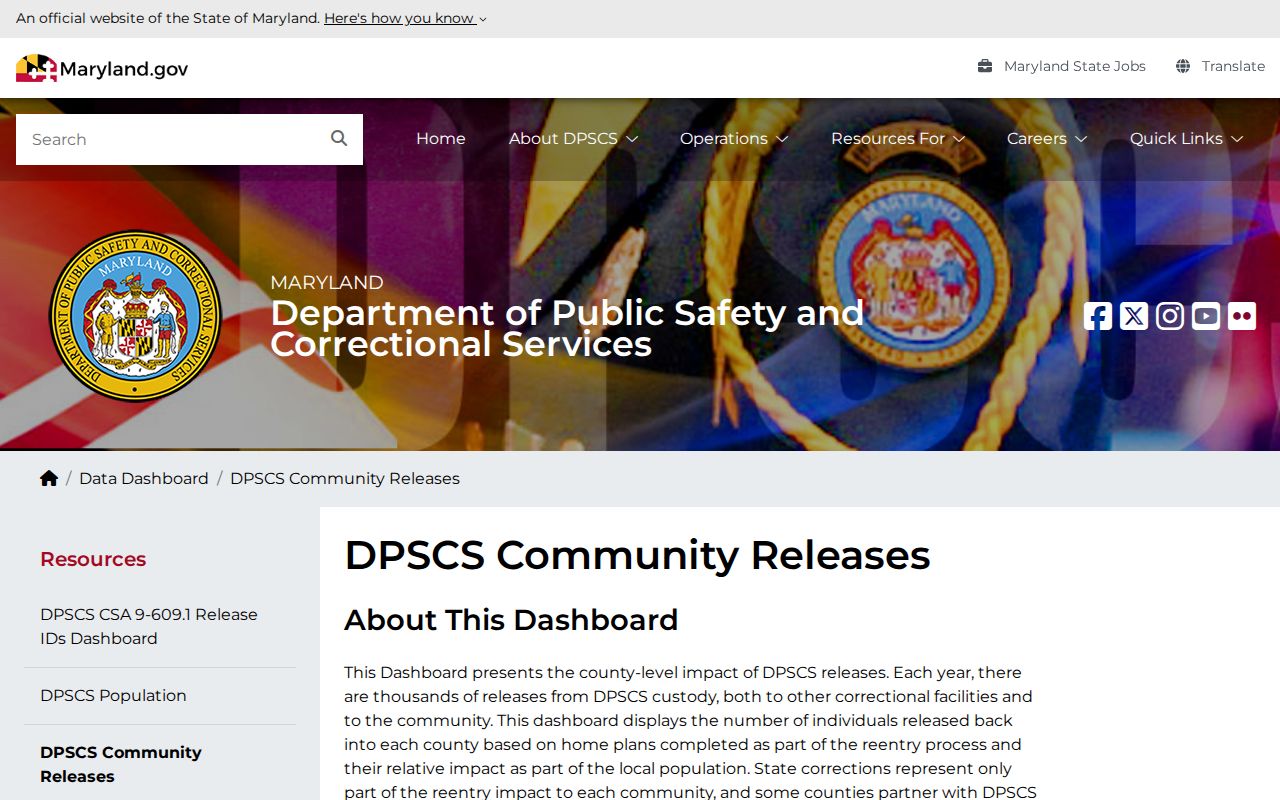
Its filters and time frame must stay with any cited number because a projection does not prove that an individual release occurred.
Maryland Release Trends in Context
Maryland's long-run DPSCS release table ends with fiscal year 2018, so it is a historical measure rather than a live count. The table reports 9,222 sentenced releases in FY2018, including 8,551 male and 671 female releases. That total was below 14,775 in FY2009 and the series peak of 16,825 in FY1998. A separate 2022 DPSCS report said the sentenced population had fallen twenty percent since 2009 and intakes and releases had fallen nearly sixty-four percent, while average length of stay rose twenty-nine percent and average sentence length rose ten percent over the prior six years.
The measures should not be spliced together. Their time frames and definitions differ. Likewise, the Maryland Parole Commission's FY2024 report counts a narrower activity: 5,931 parole hearings and 794 parole releases from DPSCS and local detention facilities, plus eighteen medical paroles. Those figures do not represent all Maryland released inmates.
The DOC Annual Data Dashboard provides another official view of population and release trends.
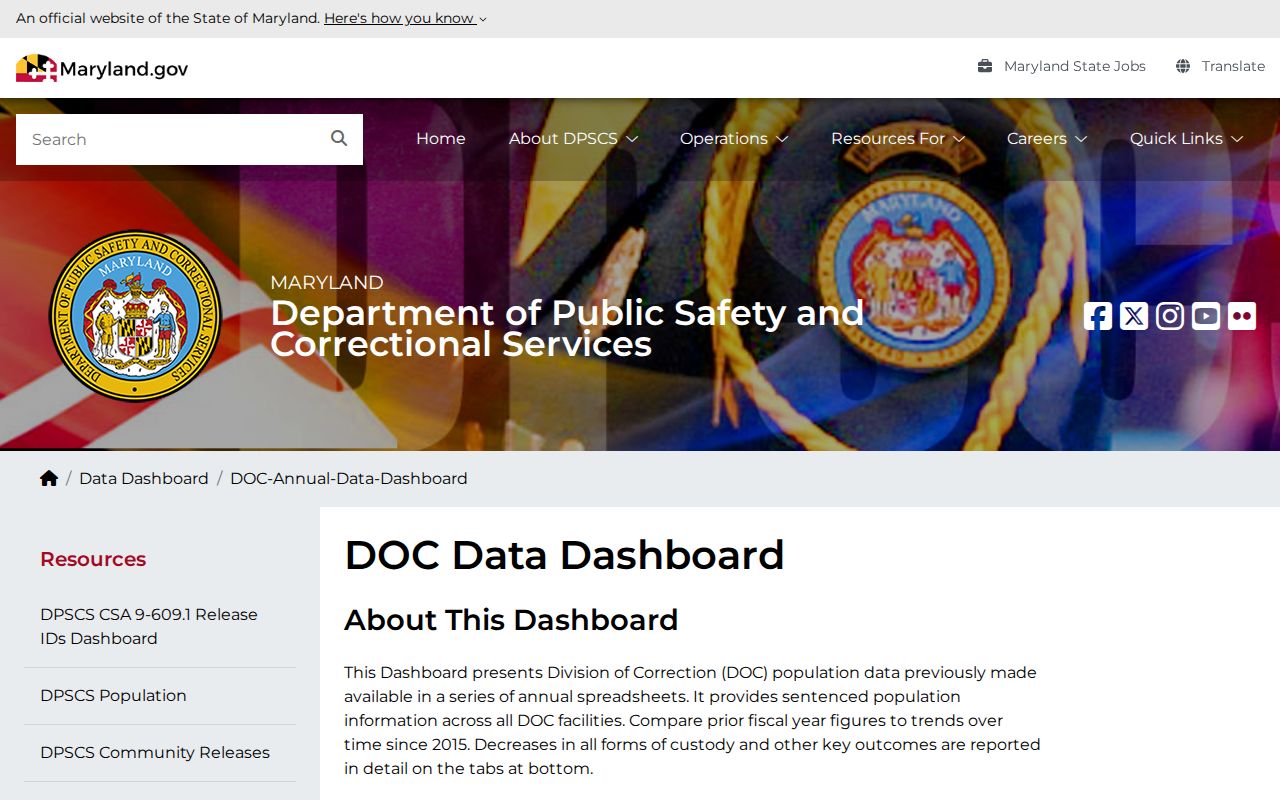
Record the visible fiscal year, filters, and as-of context before citing the dashboard, since Maryland's fiscal year runs from July through June.
Note: Keep each release statistic with its fiscal year, definition, and source instead of presenting it as a live count.
Maryland Release-Day Planning Records
DPSCS says reentry planning begins at intake. Exit orientation interviews occur within 180 days of a projected release date, and individualized planning can address identification, a Social Security card, health and treatment continuity, clothing and hygiene, transportation, and community connections. Eligible volunteers nearing release may be screened for a Local Reentry Program transfer based on classification, local ties, space, and approval. These are planning paths, not a promise that each released person receives the same items or aid.
The DPSCS Reentry Unit page uses projected-release language as part of internal preparation.
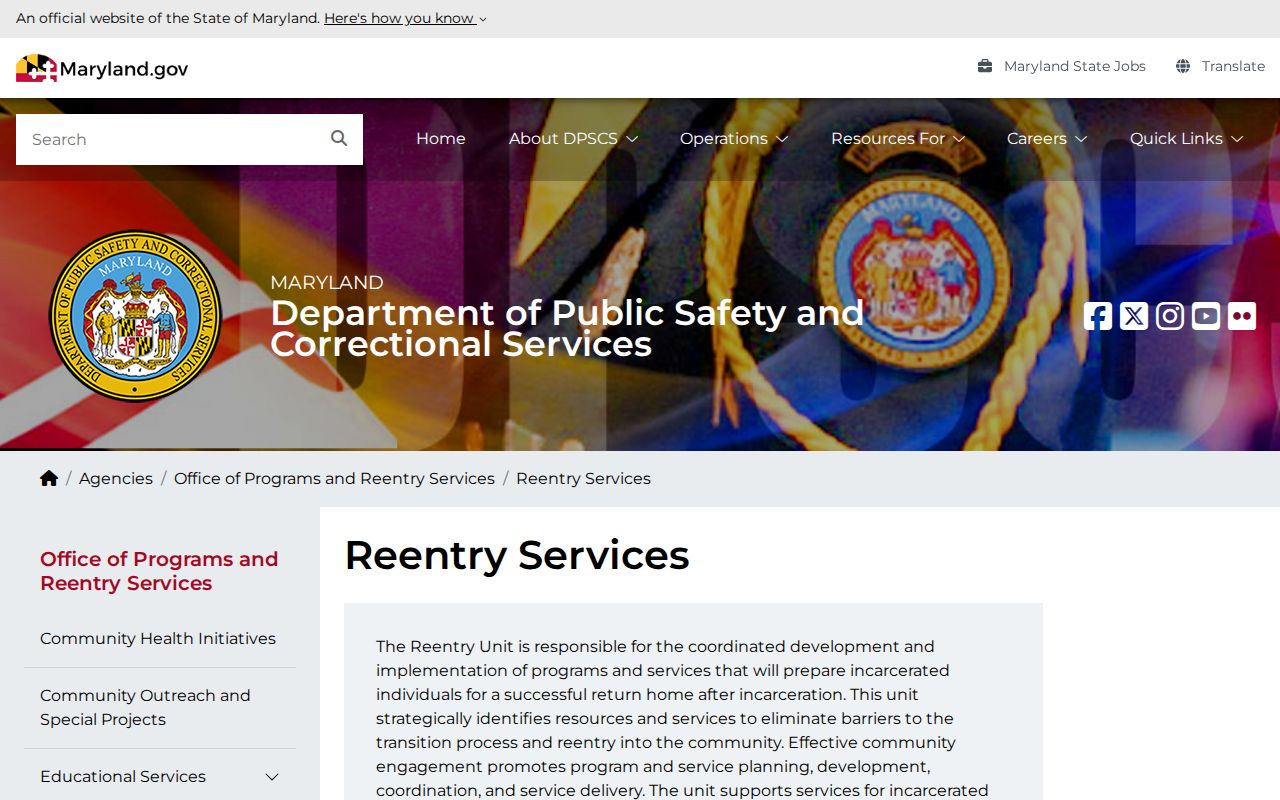
That planning language does not create a projected-date field in the public offender locator.
Correctional Services Section 9-609.1 requires the Commissioner to issue a qualifying secondary identification card before release from a state correctional facility and to begin the birth-certificate process at intake. Health-services contract specifications call for continuity work such as a care form, chronic-medication planning, and Medicaid-related steps. No reviewed statewide source promises a fixed gate-money amount, universal cash allowance, or guaranteed ride, so none should be inferred from the planning list.
Released or Still in Custody
The same person can move through several Maryland and federal systems. Use the current-custody source to locate an active placement, then use the event record that matches the exit. A current jail roster or DPSCS locator result supports custody within that system. A no-result is inconclusive. VINE can report a custody change, a court order can show legal authority, and an agency release record can show completed processing.
| System | What it can show | What absence means |
|---|---|---|
| County jail roster | Current local custody where the county publishes it | Possible release, transfer, timing issue, or unmatched search |
| DPSCS locator | Certain people currently housed in covered state facilities | Not proof of release; released people and escapees are excluded |
| Maryland VINE | Described custody changes and offered status or date details | Not proof; coverage and registration may change across systems |
| Judiciary Case Search | Docket, disposition, sentence, bond, and probation summaries | May reflect search limits, protected records, or historic depth |
| BOP locator | Federal current and many former-prisoner records | Does not resolve state, local, ICE, or supervision status |
| ICE ODLS | Current or recent immigration-custody records within scope | Does not exclude uncovered processing or other custody |
Note: Verify names with dates of birth, case numbers, commitment numbers, and source agencies because similar names can produce the wrong timeline.