
Maryland Projected and Actual Dates
A projected date answers when a sentence computation currently points toward release. An actual release date records when staff completed the exit from custody. Those facts can diverge. A projected mandatory-supervision date may move when credits are earned, revoked, restored, or recalculated. A court may alter a sentence. A warrant or detainer may cause the person to leave one custodian for another instead of returning to the community. Even an approved parole plan may carry conditions that must be met before release.
A pretrial detainee usually has no sentence-based projected release date because the case has not produced a final custodial term. The useful records are then a bond or release order, case docket, jail release entry, or transfer record. A sentenced county detainee may have a local computation held by the county correctional agency. A state prisoner’s computation belongs to the Maryland Department of Public Safety and Correctional Services, or DPSCS. These are separate record systems.
The DPSCS Community Releases dashboard shows how the agency presents projected and completed community-release measures.
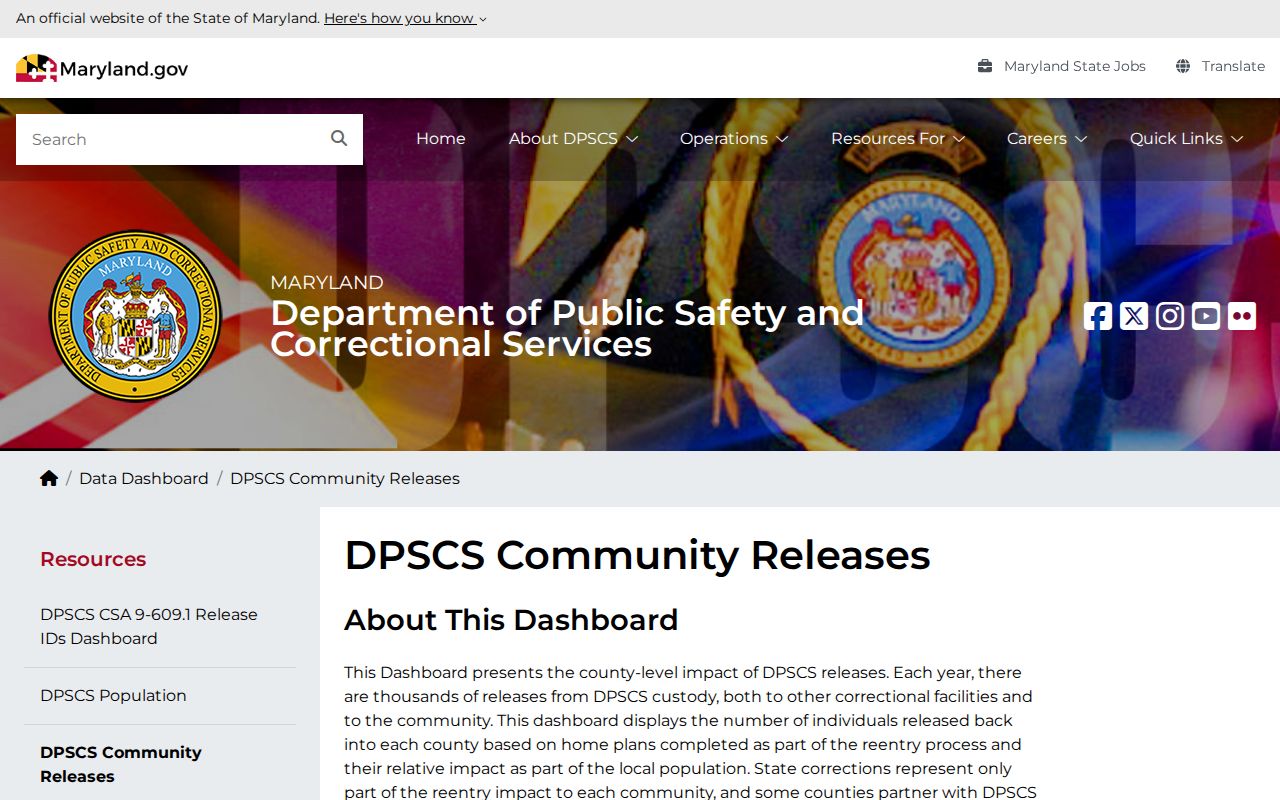
The dashboard separates community returns from transfers and deaths. Its filters and time frame must be kept with any figure, and a projection on the screen is not proof that one named person left custody.
Maryland Locator Has No Date
The public DPSCS Incarcerated Individual Locator cannot answer the main date question. It accepts first and last name and is designed to locate certain people currently housed in Division of Correction facilities, Patuxent Institution, and some people serving short sentences in state pretrial facilities. DPSCS expressly excludes people no longer in custody for any reason. The public result has no projected, tentative, maximum-expiration, or mandatory-supervision date field.
This limit matters twice. First, a current result can help identify covered state custody and a facility location, but it cannot expose the sentence calculation. Second, a no-result does not establish release. It may reflect county custody, federal or immigration custody, a spelling mismatch, a person outside the locator’s covered population, escape, or release. A Maryland inmate projected release date must come from a different source.
The official DPSCS locator explanation states who appears and warns that people no longer in custody are omitted.
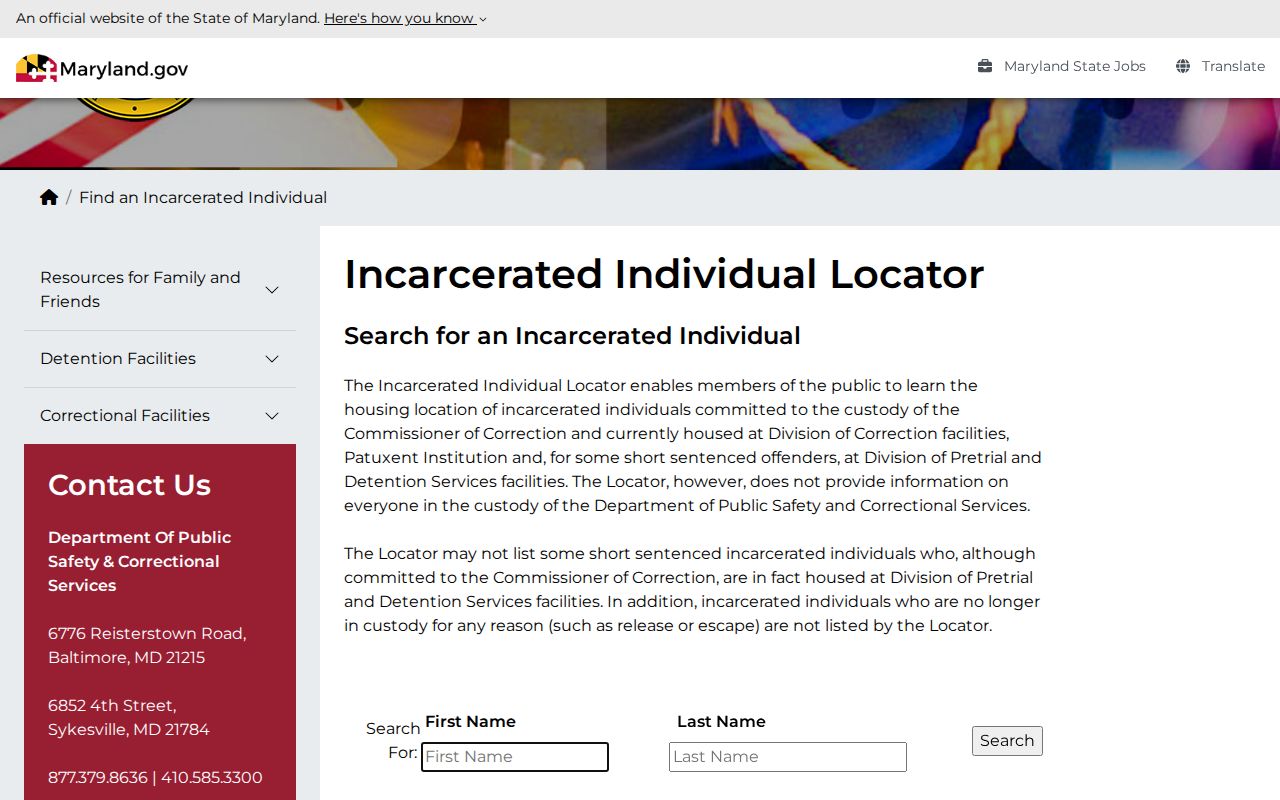
That warning prevents a common error: treating a blank search result as a released status or as evidence that the forecast date has passed.
Note: Maryland’s public locator is a current-custody location tool, not a released-person archive or public sentence calculator.
Find a Maryland Release Projection
The right path follows the legal custodian. DPSCS calculates a state prison sentence. A county agency holds a locally served jail sentence record. The court holds the judgment and later orders, while VINE may relay an event or date supplied by a participating source. No one portal combines all four. Use known identifiers and an approximate sentence period so records staff can locate an existing computation rather than being asked to create a new analysis.
- Identify the sentence and custodian. Check the sentencing case, last known facility, and whether the term is state, local, or federal.
- Test current state custody. Use the DPSCS locator by legal first and last name, but do not expect a date field or treat no result as release.
- Review the court record. Confirm the sentence, concurrent or consecutive terms, later modifications, and any commitment or release order.
- Ask the proper records holder. For a state term, request the maximum expiration date, projected mandatory-supervision date, jail-credit entry, diminution-credit ledger, and recalculation history from DPSCS.
- Verify the event. Compare VINE, the custodial release entry, and any parole or mandatory-supervision order before calling a forecast an actual release.
County records must be requested from the county or local correctional custodian, not DPSCS. Federal sentenced custody uses the Bureau of Prisons record, while an immigration detainer can shift the next inquiry to ICE. The Maryland County Directory routes a local sentence inquiry to the correct jurisdiction.
Maryland Release Envelope Planning
Maryland does use the phrase “projected release date” inside its reentry process. DPSCS says exit orientation interviews occur within 180 days of that projection. The interview helps form an individualized release plan placed in a Release Envelope. Planning may address identification, health continuity, clothing, transportation, treatment, community resources, and other documented needs. The planning phrase proves that an internal projection exists, but it does not turn that date into a public locator field.
Victim Services uses another term: “expected sentence expiration date.” Eligible registered victims may receive that information and notice of certain custody or supervision events. That is an authorized notification channel, not a general person-name lookup. Written Victim Services registration is also separate from a VINE registration. Users should preserve the exact term and source because projected mandatory supervision, expected expiration, parole eligibility, and actual release describe different points.
The DPSCS Reentry Unit describes the state’s planning process around a projected release date.

The official reentry material supports planning terminology and timing. It does not offer a public calculator or a promise that every projected date will become the actual exit date.
Maryland Credits Change Release Timing
Maryland calls sentence reductions “diminution credits.” The governing framework is Correctional Services Title 3, Subtitle 7. Under §3-704, good-conduct credit is generally deducted in advance at ten days per calendar month, prorated. The rate is five days per month when the term includes a concurrent or consecutive sentence for a statutory violent crime or specified high-level controlled-substance crime. Stayed-sentence time, escape time, and some time denied after revocation do not earn credit as ordinary service does.
Other credits depend on conduct and activity. Section 3-705 permits five days per month for satisfactory assigned work. Section 3-706 permits five days per month for satisfactory progress or completion in qualifying programs. Related provisions govern education, special projects, aggregate limits, and revocation or restoration.
| Maryland credit | Research-supported rule | Why the date can differ |
|---|---|---|
| Good conduct | Generally ten days monthly, or five for specified sentence composition | Offense, sentence structure, excluded time, and revocation matter |
| Work tasks | Five days monthly for satisfactory assigned-work performance | It depends on documented performance and eligible time |
| Programs | Five days monthly for qualifying progress or completion | Program type, participation, and statutory limits apply |
| Other adjustments | Education, special projects, restoration, and aggregate limits have separate rules | The complete ledger controls, not one headline rate |
Do not multiply a sentence by a rate and announce an exit day. The computation also depends on jail credit, offense date, concurrent or consecutive terms, new sentences, and prior adjustments.
Note: Diminution means a lawful reduction in time to be served, while a credit ledger records each applied change.
Maryland Credits Mean Supervision
Diminution credits do not usually erase the remainder of a Maryland sentence. Under §7-501, a qualifying person serving more than 18 months is released after the term is reduced by applicable credits. That event is mandatory supervision release. Section 7-502 keeps the person in legal custody until the full term expires and subjects the release to applicable parole rules and conditions. Section 7-503 requires DOC to issue a written order setting out conditions for serving the balance outside a correctional facility, except when release is to a detainer.
Maryland’s violent-crime safeguard is not a universal “serve 85 percent” rule. For a covered crime of violence committed on or after October 1, 2009, mandatory-supervision release cannot occur before the applicable parole-eligibility point. Criminal Procedure §6-217 requires a sentencing court in qualifying cases to state the minimum period before parole and mandatory-supervision conditional release, but that statement is informational and is not part of the sentence itself.
- Mandatory supervision
- Conditional release caused by sentence credits, with the remaining term served outside the facility under legal custody.
- Maximum expiration
- The end of the full sentence term, subject to the controlling judgment and later lawful changes.
- Discharge
- The end of the relevant custodial sentence or jurisdiction, rather than a conditional move into supervision.
- Detainer
- A legal hold or request from another authority that can cause transfer instead of community release.
What Moves Maryland Release Dates
A sentence projection is the product of a live record. Some changes affect the time calculation itself. Others leave the sentence math intact but prevent a community exit. The distinction is vital when comparing two dates from different documents.
| Factor | Effect on a Maryland projection | Record to verify |
|---|---|---|
| Credit earned, revoked, or restored | Changes the diminution balance and conditional-release point | DPSCS credit ledger and recalculation history |
| Jail credit correction | Changes credited time already served | Judgment, commitment record, and DPSCS computation |
| Concurrent or consecutive term | Changes how multiple sentences combine | Sentencing order and computation sheet |
| Sentence modification or new case | Can shorten, extend, or restructure the term | Maryland court docket and signed order |
| Parole decision | May authorize conditional release subject to conditions | MPC result, parole order, and actual release entry |
| Warrant or detainer | May route the person to another custodian | Holding agency and transfer record |
A Maryland parole approval may depend on a certified home plan, required program work, a future release month, and continued conduct. It is not a same-day release record. Likewise, a court order may authorize release before staff finish processing, and another detainer can still control the next movement.
Request Maryland Sentence Records
The Maryland Public Information Act covers existing agency records but does not require an office to create a custom calculation. A focused DPSCS request should name the person, facility or system, approximate date range, DOC or commitment number, and court case when known. Ask for existing fields: maximum expiration date, projected mandatory-supervision date, jail-credit entry, diminution-credit ledger, recalculation history, and release or discharge event. Also request electronic copies, segregable portions, and advance notice before fees exceed a chosen amount.
The DPSCS Public Information Act page identifies the state correctional records route and explains that exemptions or redactions may apply.
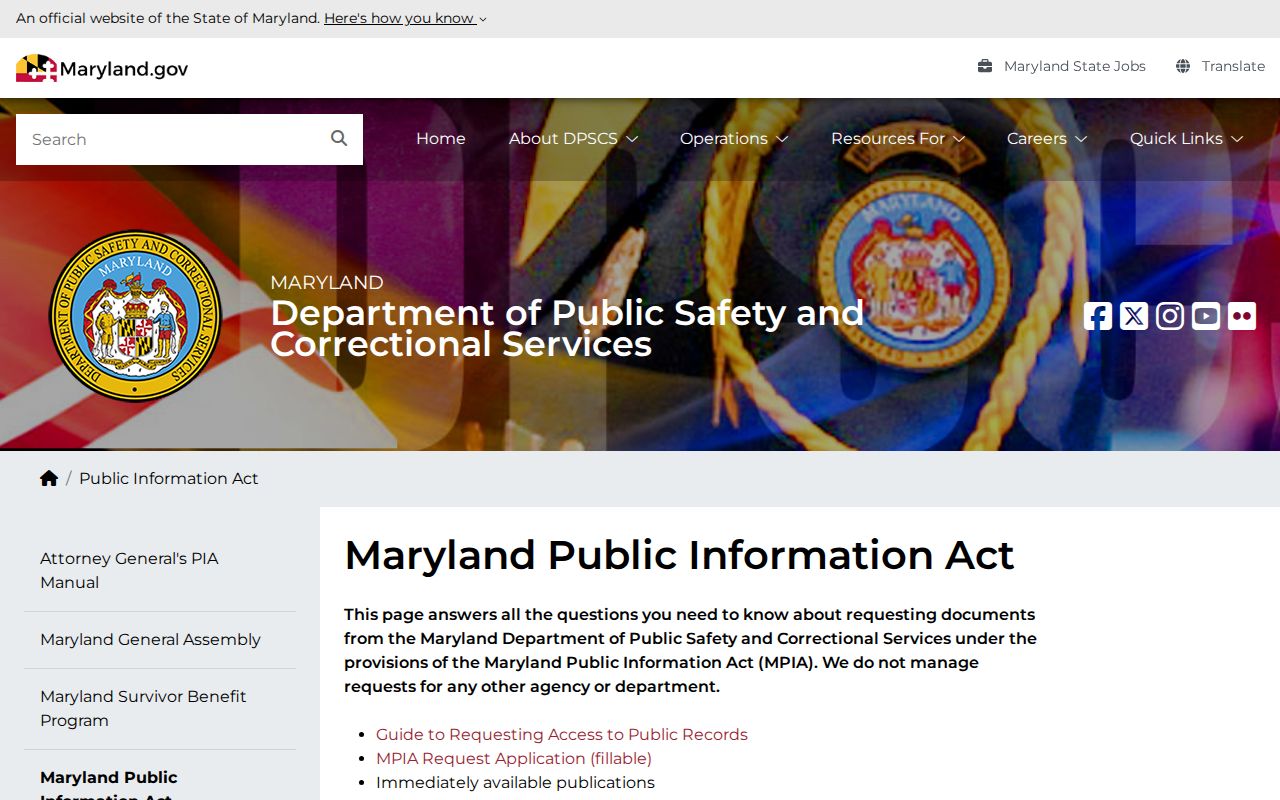
The agency need not disclose protected medical, security, personnel, privileged, or investigatory material, yet releasable portions of an existing sentence or release record may still be requested.
General Provisions §4-203 calls for a prompt grant or denial and sets an outside response point of 30 days. If production takes more than ten working days, the response must include required timing, fee-range, and delay information. County jail records remain with the local custodian, and a clerk supplies the court’s official order. Sending the same broad request to every Maryland agency slows the search and blurs which record proves which fact.
Note: Ask for named records and fields, not an agency opinion about when someone will leave custody.
Confirm a Maryland Release Event
When the forecast nears, compare the latest computation with an event source. Maryland VINE can relay custody release, escape, transfer, and described parole or probation events when the participating source supplies them. Search the specific person, compare identifiers and source agency, and read the exact status and date. A transfer is not a community release. Registration may need to be renewed when custody moves from a county jail to state prison or from custody into supervision.
The Maryland VINE portal provides a statewide person-search and notification channel.

VINE can bridge a roster disappearance, but the court or custodial record should establish the legal release type when the displayed event does not do so.
For a completed state exit, obtain the actual release event, written mandatory-supervision or parole order, and receiving-agency entry if a transfer occurred. For continuing conditions after a conditional exit, the Maryland Parole and Probation page explains the separate supervision record. That final check keeps “projected,” “approved,” “transferred,” “released,” and “discharged” from being treated as the same status.