
Maryland Parole and Probation Compared
A person can be out of a Maryland correctional facility and still be bound by a sentence or court order. Parole is a discretionary, conditional release decided by the Maryland Parole Commission, or MPC. The balance of the full sentence is served under supervision. Probation is imposed by a court and can follow a jail term, a prison term, or a disposition that does not involve a parole decision. Mandatory supervision is a third route. It results when diminution credits bring a qualifying person to the statutory release point, and the person remains in legal custody until the full term expires.
The Division of Parole and Probation, or DPP, is part of the Maryland Department of Public Safety and Correctional Services. It handles community supervision within its authority. The Maryland Division of Correction, or DOC, runs state prisons. Those roles should not be merged. The MPC makes parole decisions, DPP supervises community cases, courts control probation orders, and DOC records the state-prison custody event.
| Status | Who creates it | Best verification record | How it ends |
|---|---|---|---|
| Parole | Maryland Parole Commission | Parole order, court filing, MPC record, and actual custody-release record | Revocation, sentence expiration, or another lawful termination |
| Probation | Sentencing court | Sentencing or modification order, docket, and DPP confirmation when disclosable | Court action or the governing term’s endpoint |
| Mandatory supervision | Statutory credit framework and DOC release order | Written mandatory-supervision order, sentence computation, and release event | Full-term expiration or lawful change in status |
The official Division of Correction page shows where DOC sits within Maryland’s correctional structure.
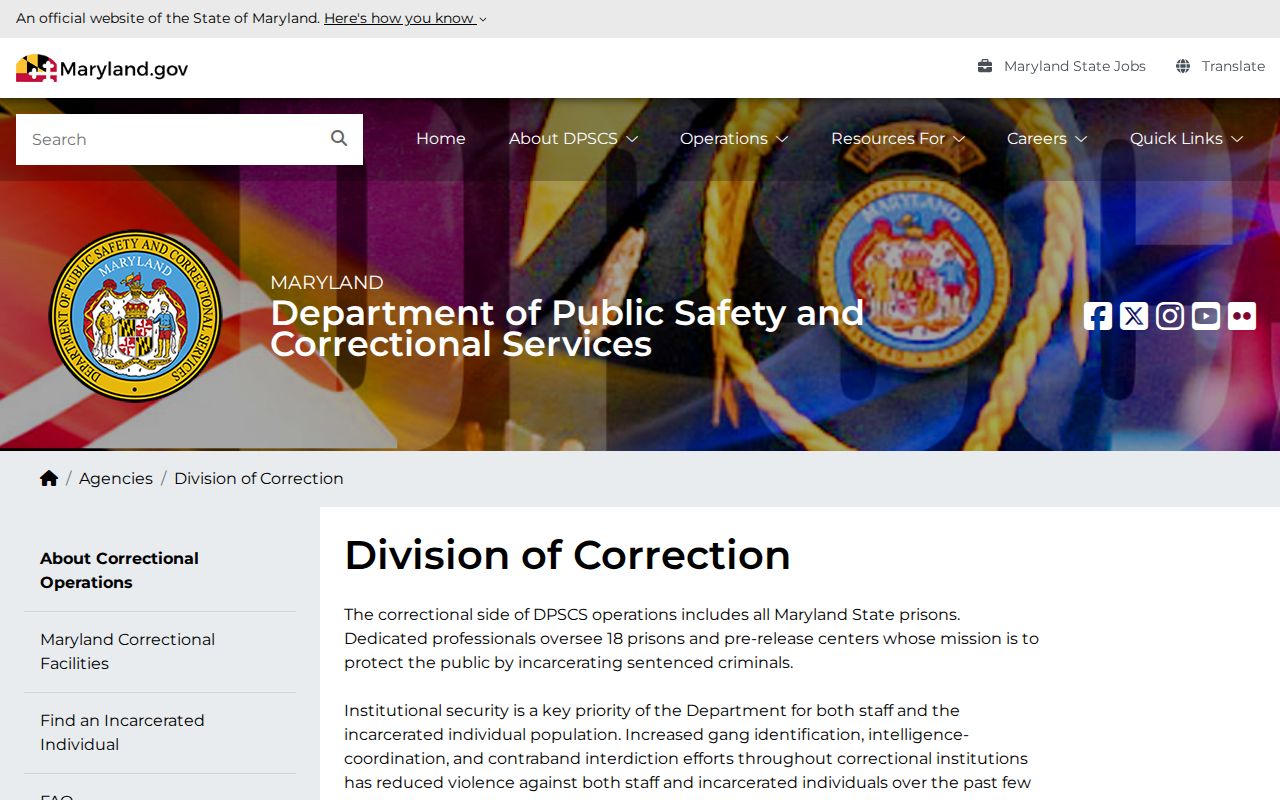
The agency structure matters because a DOC custody record is not the same record as a DPP supervision file or an MPC parole decision.
- Parole
- Conditional release granted by the MPC before the full sentence expires.
- Probation
- A court-ordered period with stated terms, whether or not prison parole was involved.
- Mandatory supervision
- Conditional release tied to sentence credits and governed by a written DOC order.
- Discharge
- The end of the relevant custody or supervision relationship, proved by the controlling record.
Verify Maryland Post-Release Supervision
Maryland does not provide a verified public statewide DPP search by supervisee name. The DPSCS Incarcerated Individual Locator cannot fill that gap. It is a current-placement tool, and DPSCS says people no longer in custody are not listed. A blank result can reflect release, escape, different custody, a spelling issue, or a person outside the locator’s covered population. It cannot confirm parole, probation, mandatory supervision, or discharge.
Verification works best as a record chain. Begin with the court case, since probation is a court disposition and a parole order is filed with the sentencing court clerk. Then identify whether MPC, DPP, DOC, or a local jail holds the next record. A person who left a county jail may have been released under court terms, transferred to DOC, or moved to another custodian. The state prison locator only helps test current covered DOC placement.
- Match the person to the sentencing case. Use the exact name, jurisdiction, date of birth when displayed, and case number to avoid mixing people with similar names.
- Read the disposition and docket for probation, sentence modification, a filed parole order, or another release-related entry. Get the actual order from the clerk if the summary is unclear.
- For parole, consult MPC material and request an available person-level record. Do not treat an open-hearing listing or approval as proof that physical release occurred.
- Use the DPP office directory to find the office serving the relevant Maryland area. Ask for routing or lawful confirmation without assuming staff may disclose protected details.
- For the custody exit, use VINE where it reports the event, the jail or DOC release record, or a focused Public Information Act request.
The DPSCS locator notice documents the current-custody boundary that shapes this process.
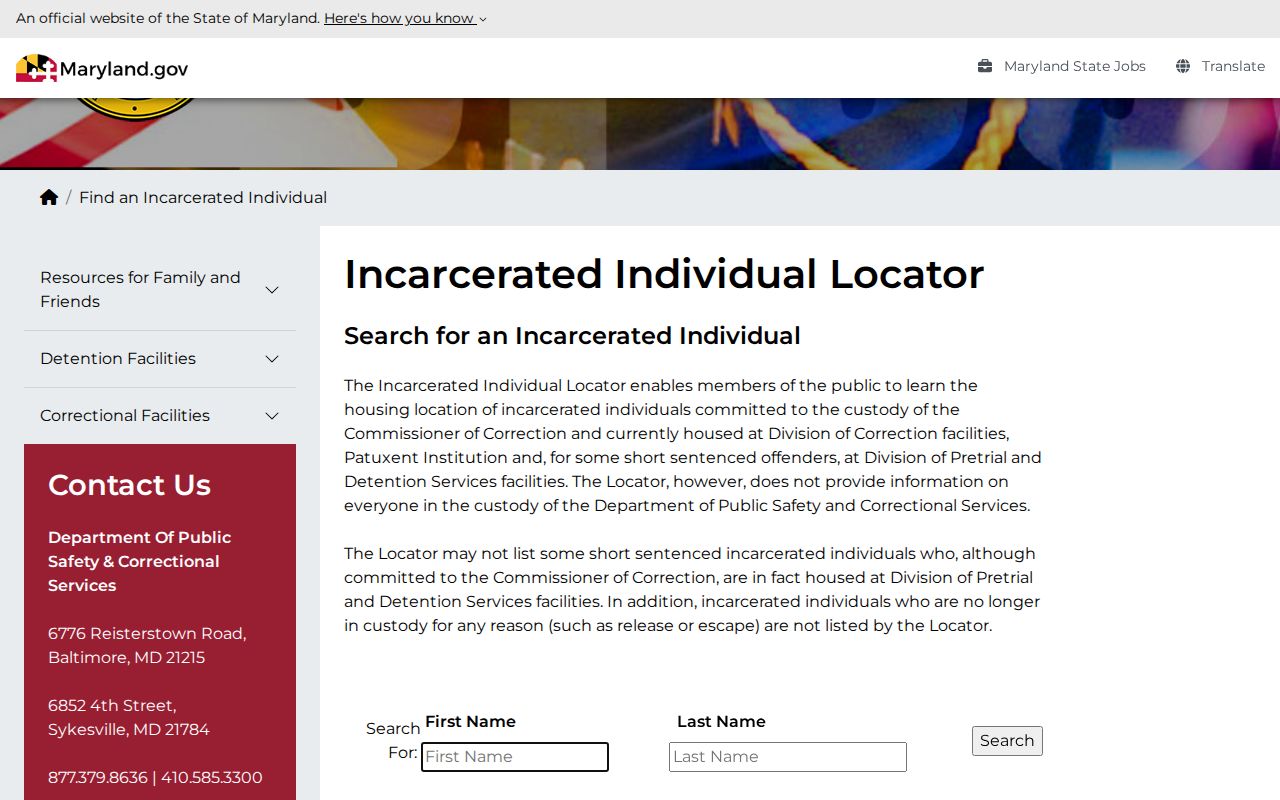
The warning explains why the search must branch to court, DPP, MPC, VINE, or records channels after a person leaves covered custody.
Note: An online docket is a summary, so obtain the filed order when the exact supervision term or release authority matters.
Maryland Supervision Agencies and Records
The Maryland Parole Commission decides parole matters. It is not the field supervision agency. DPP manages parole, mandatory supervision, and court-ordered probation cases within its authority through offices across Maryland. The official DPP office directory is the correct way to locate the office for a relevant area. Its public pages do not provide a statewide person-name lookup.
Division of Parole and Probation
6776 Reisterstown Road, Suite 212
Baltimore, MD 21215
410-585-3500 or 877-227-8031
Use the directory for area-office routing. Staff may limit person-level details protected from public disclosure.
The MPC supplies hearing information, public-meeting material, records contacts, and guidance about parole outcomes. As of the research date, it has no general public person-name decisions database. Commission meeting minutes are not person-level parole results. Registered victims have a separate written-results channel through MPC Victim Services, while other requests may go through MPC or DPSCS records procedures and the sentencing court.
The MPC decisions and outcomes FAQ explains how Commission actions differ from a completed release.
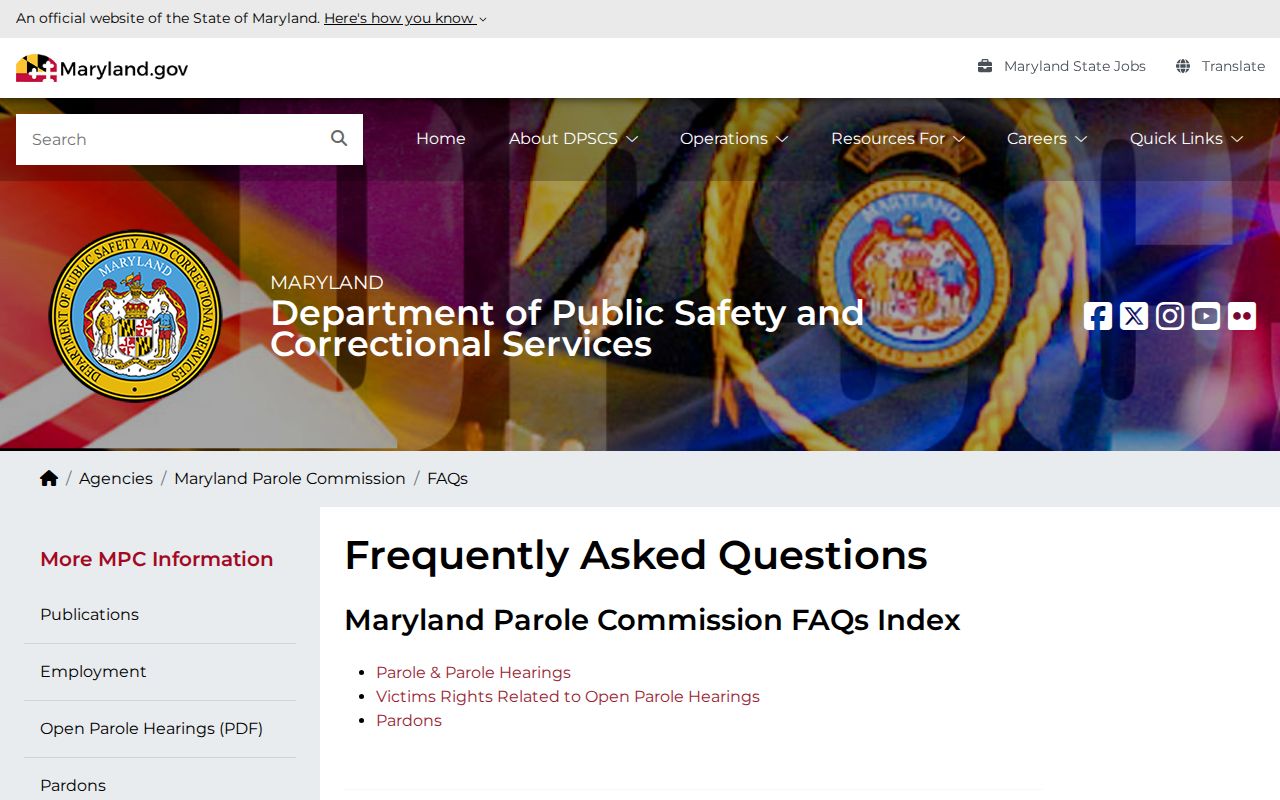
An approval can depend on a home plan, programming, conduct, or a later release month, so it must be followed by the custody record.
Maryland Violations and Absconder Records
Conditions differ by the controlling order. A parole order, mandatory-supervision order, or probation order states what applies to that case. Maryland law requires DOC to issue a written order before mandatory-supervision release that states the conditions for serving the remainder outside a correctional facility, except when release is to a detainer. A parolee remains in legal custody until the full term expires. Court probation remains governed by the court’s order.
Absconding means an alleged failure to remain under supervision. It is not discharge. It may lead to a warrant, violation process, or revocation, but no current official statewide DPP absconder-name list was verified. DPP performs warrant-apprehension work, and its FAQ routes nonemergency violation information through the statewide number. The court record, MPC material, and agency confirmation are safer than an unofficial list.
Maryland VINE materials describe some parole and probation events, including release, transfer, supervising-agent changes, and violation-hearing results. That notification layer can help track change, but it does not replace the order or agency record. Registration may need to be renewed when a person enters community supervision from custody.
The Maryland VINE portal is the official notification search tied to those event feeds.

The portal is a useful alert layer, while the underlying court, MPC, DPP, or DOC record remains the stronger source for legal status.
How Maryland Supervision Ends
Supervision ends at the endpoint set by the sentence, statute, or court order, unless another lawful action changes it. Silence in an online system is not enough. Obtain the maximum-expiration record, termination order, or the precise completion document that applies. Earned compliance credits can reduce active supervision, but Maryland law distinguishes abatement of active supervision from a change to the legal expiration date. A person who no longer reports actively may still have a later legal endpoint.
Maryland uses two named documents. Correctional Services §7-103 permits DPSCS to issue a certificate of completion to a formerly supervised person who fulfilled all conditions and obligations and is no longer under Department jurisdiction. Section 7-104 requires a certificate of rehabilitation for a qualifying person who meets the statute’s conditions and offense limits. Neither should be replaced with the vague promise of a generic discharge certificate.
The MPC Records Unit retains the parole files described in its FY2024 report until five years after maximum sentence expiration. That retention rule does not mean the file is visible through a public person-name portal, and it is not a rule for every DOC or court file. A focused request should name the individual, relevant case or commitment number, approximate period, and exact document sought.
A useful request separates the status questions. Ask for the filed parole order or mandatory-supervision order when the terms matter. Ask for the release event when the physical exit date matters. Request the maximum expiration or court termination record when the end of legal control matters. Include a known DOC number, case number, date of birth, and date range to help the custodian locate the existing file. Maryland’s Public Information Act does not force an agency to create a new answer, list, or analysis. It also permits or requires some protected material to be withheld or redacted. Asking for electronic copies, segregable public portions, and a fee estimate keeps the request narrow. The sentencing court clerk remains the record holder for the filed parole order and probation judgment, while DPSCS holds its own correctional and supervision records.
The DPSCS Public Information Act page explains the state correctional records route.
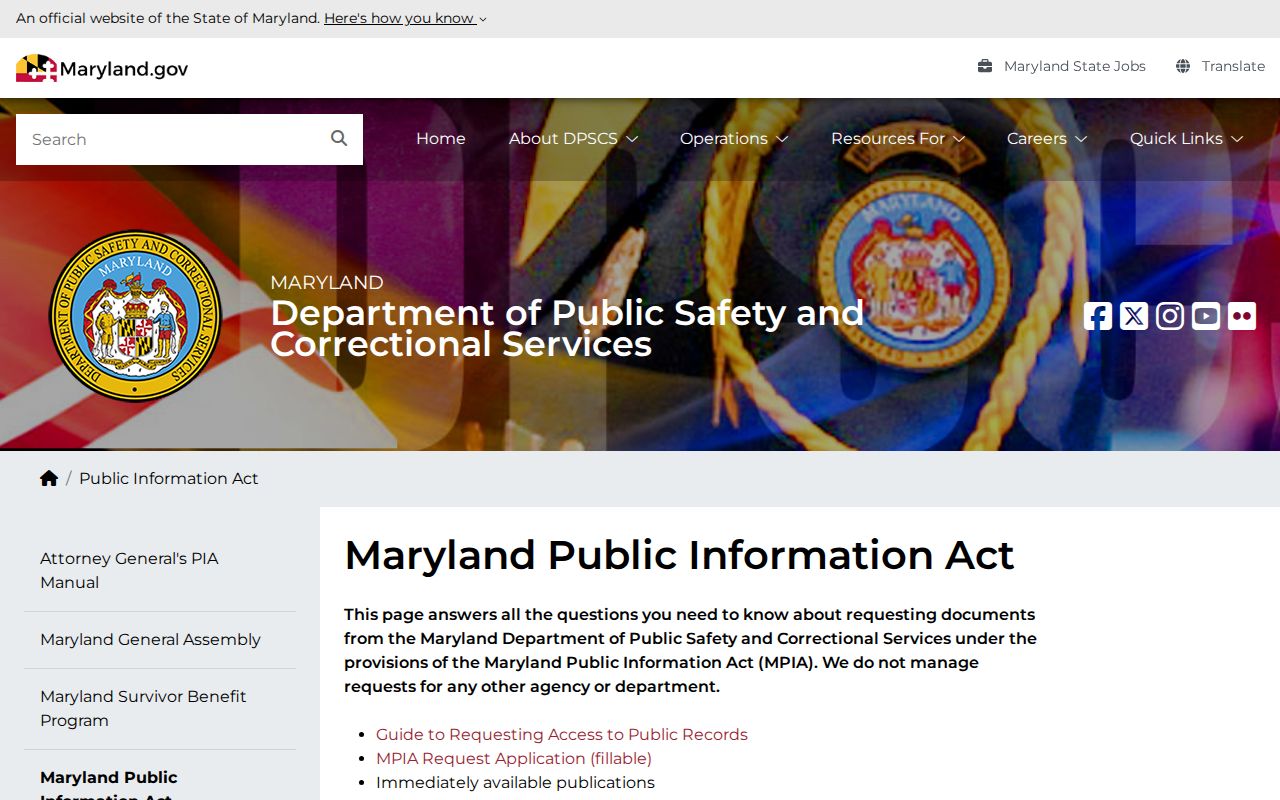
Ask for an existing completion, release, parole, or sentence record rather than asking the agency to create a new status report.
Note: County jail records and court files stay with their own custodians, even when DPP later supervises the person statewide.
Maryland Release Papers Prove Status
Maryland’s paperwork can bridge the gap left by public search tools. Before mandatory supervision, DOC must issue the written conditions order required by §7-503. For parole, §7-308 requires the parole order to be filed with the sentencing court clerk. The custody record then establishes when staff completed the release. These records answer different questions: authorization, terms, and actual physical exit.
A state-facility release can also involve the identification card required by §9-609.1. The Commissioner must issue a qualifying card before release for use as secondary identification for motor vehicle purposes and begin the birth-certificate process at intake. That card is release-day documentation, but it does not by itself establish the full sentence or supervision status. Use the parole or mandatory-supervision order and sentence record for those facts.
When the person came from a county jail, the local release record may establish the exit while the sentencing docket states probation terms. When the person came from DOC, the state custody record, filed parole order, or mandatory-supervision order supplies the matching state layer. A federal or immigration transfer requires a separate federal channel. The Maryland released inmates overview maps those custody boundaries and release-record paths.
Maryland Reentry and Supervision Handoff
DPSCS says reentry planning starts at intake and becomes more focused near a projected release. Exit orientation interviews are scheduled within 180 days of the projected date. An individualized plan may address identification, health and treatment continuity, clothing, transportation, and community resources. These are planning subjects, not a promise that each released person receives the same aid or follows the same path.
The handoff matters for record searches. A projected date in an internal plan does not prove release. A completed exit can lead to parole, mandatory supervision, probation, no active supervision, or another custodian. The source must match the event. Check the release record for physical exit, the controlling order for legal terms, and DPP for the correct community-supervision route.
The DPSCS Reentry Unit page documents Maryland’s planning framework and projected-date language.

The captured page supports a planning context, not a public supervision lookup or proof that a named person was released.
Note: Reentry planning begins before release and does not prove that the projected exit occurred on the expected date.