
Maryland VINELink Release Coverage
Maryland VINE is a free and confidential notification service available through the web, app, and telephone. Official Maryland material describes several linked event layers: custody, court cases, protective orders, and parole or probation. Custody notices can include release, escape, and transfer. Community-supervision notices can include release from supervision, transfer, a supervising-agent change, and a violation-hearing result. The exact event depends on the source record and the registration attached to it.
VINE is a bridge between systems, not a single master corrections file. A county detention record, a DPSCS prison record, a court case, and a DPP supervision record each come from a different source. Coverage and fields may vary. Always read the agency or location shown with the record. If the named source changes, the status may describe a transfer rather than a return to the community.
The official Maryland VINE portal is the starting point for a person search and notification registration.

The portal identifies Maryland as the selected jurisdiction, but the source agency inside each matching record controls what that result means.
- Custody status
- The status reported by the participating jail or state correctional source.
- Transfer
- A move to another location or system, not proof of community release.
- Release event
- A reported exit from the named custodian, which may still require a court or agency record to identify the legal type.
- Registration
- A request for alerts tied to a specific record or event stream.
Search a Maryland Inmate on VINELink
Search one person at a time. Begin with the legal name and add an offender identifier when known. Similar names require close comparison. The location, source agency, identifier, and other displayed facts are more useful than the name alone. Do not select a record merely because it is the first result.
- Open the Maryland portal and choose the custody or person search that fits the event being tracked.
- Enter the person’s name or a known offender identifier. Test a verified spelling variant if the first search returns no sound match.
- Open the likely record and compare every available identifier, source agency, and location with facts already known.
- Read the status exactly as displayed. Record the date and source rather than turning a transfer, no-result, or stale location into a release claim.
- If release appears, obtain the court order or custodial record when the release type and effective time need firm proof.
A person who vanished from a local jail roster may have entered DOC custody. Check the state locator for current covered prison placement before treating the roster change as release. DPSCS also states that people no longer in its custody are excluded from that locator. This means a no-result there is inconclusive as well.
The DPSCS Incarcerated Individual Locator notice sets out that current-custody limit.
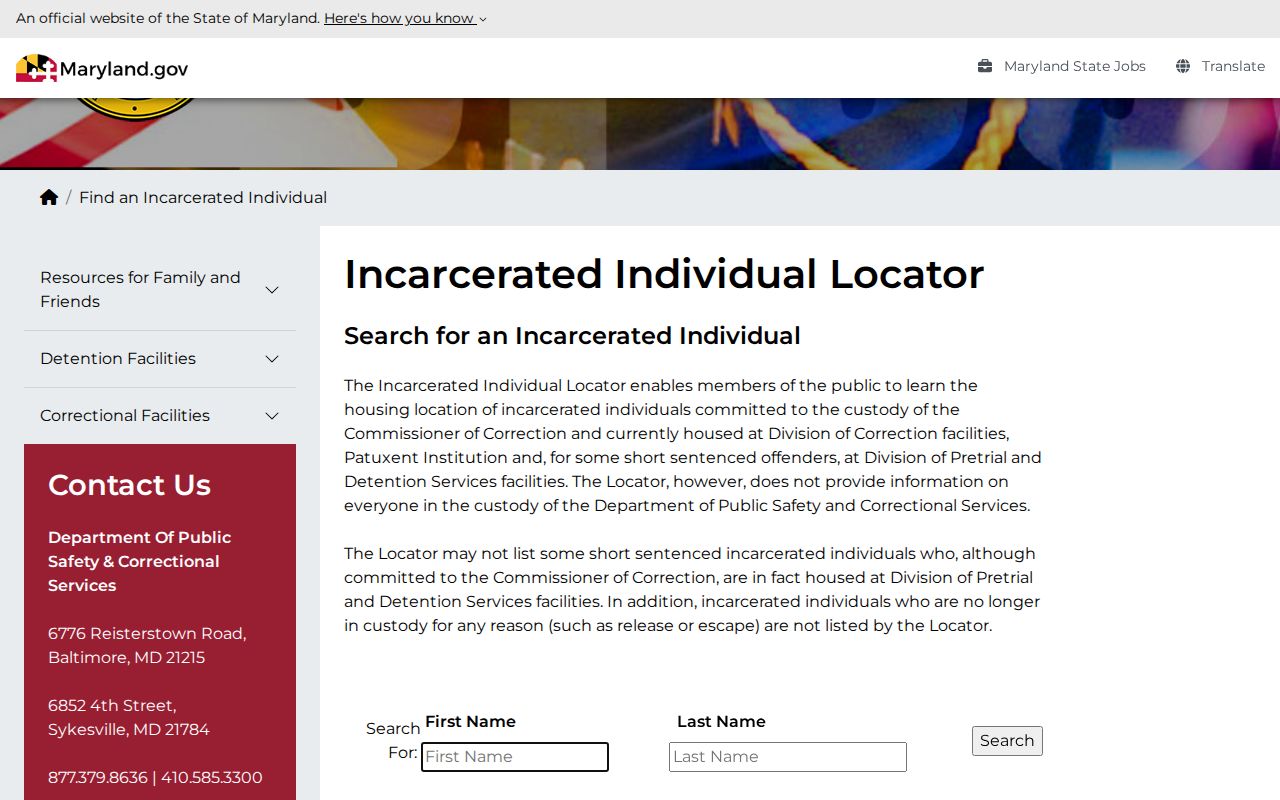
The locator screenshot belongs in the fallback path because it helps distinguish a state transfer from a VINE-reported community release.
Note: The Maryland County Directory routes local jail questions to the jurisdiction that created the release record.
Read a Maryland VINE Release
Fields differ by record source, so treat the visible labels as the authority for that result. Maryland’s official instructions tell users to compare the person, source, location, and event. A released status and displayed date can document what VINE received from that feed, but they do not always state whether the legal event was parole, mandatory supervision, expiration, court-ordered release, or another form of exit.
| Displayed item | What it can establish | What still needs checking |
|---|---|---|
| Name or offender identifier | Which record is being viewed | Match against known facts to avoid a namesake |
| Source agency | Which jail, correctional, court, or supervision feed reported the event | Whether another custodian now holds the person |
| Custody status | The source’s reported status | The legal release authority and any later change |
| Facility or location | The reported place linked to the current record | Whether a movement was a transfer or community exit |
| Event date | The date supplied for the reported event | The filed order and final custodial processing time |
Maryland’s public DOC locator supplies no public released profile, release date, projected date, or historical retention period. VINE can therefore carry useful event data after a roster change. Still, preserve the exact VINE wording. A court order proves authorization; the jail or prison record proves completed exit; the supervising record proves the next legal status.
Register Maryland VINE Release Alerts
Registration must be attached to the correct matching record. Maryland materials describe phone, text, email, TTY, and app options as offered by the service. More than one contact can be registered. Choose the route that can be checked reliably, and keep the record details needed to return to the same source later.
- Open the verified person or case record and select its notification option.
- Choose an offered phone, text, email, TTY, or app route and enter the requested contact details.
- For phone registration, create a four-digit PIN. Keep it private but available to acknowledge an automated call.
- When a call arrives, listen to the message and enter the PIN followed by the pound sign. Maryland says repeat calls may continue for up to 48 hours until acknowledged.
- Return to VINE and register again if the person or case moves into a new system whose events need to be followed.
Email registration does not use the telephone PIN. A round-the-clock operator can help reset a PIN. VINE registration is also separate from written DPSCS Victim Services registration. Registering in one does not automatically enroll a person in the other.
The PIN confirms receipt of a call. It does not grant access to a protected file, certify the legal meaning of an event, or replace the source agency’s record.
Confirm Maryland VINELink Release Results
VINE data can lag, and a no-result is not proof of release. First identify the last known custodian. For a county jail event, ask the local detention agency for its release record. For a state prison event, use VINE, court or MPC material when relevant, and a focused DPSCS records request. For probation, consult the sentencing case and the DPP office serving the area. Maryland has no verified public DPP supervisee-name search.
A focused request asks for an existing record rather than a custom report. Useful items can include the commitment or booking event, release date and time, release authority or type, receiving agency after transfer, release order, or sentence-computation record. Some personal, medical, investigative, victim, and security material can be withheld or redacted under law.
The DPSCS Public Information Act page provides the records-request channel for state correctional material.
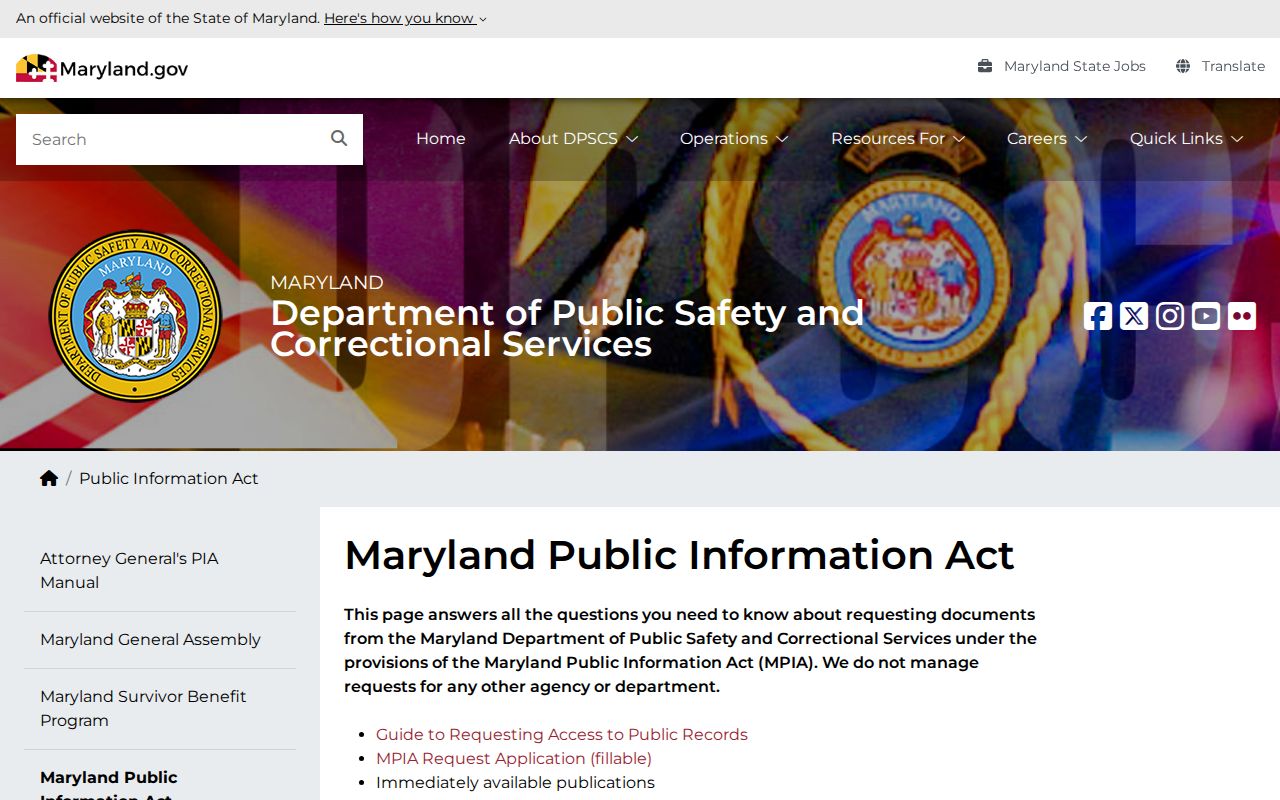
The official request route is the fallback when a public locator excludes the person or a VINE result does not show the needed release detail.
Maryland Judiciary Case Search can supply a docket and disposition path. Match the person and jurisdiction, then obtain the actual order from the clerk when the summary does not resolve the issue. A court entry can authorize release before a facility finishes processing, and another warrant or detainer can still control.
The court portal uses exact-name matching by default. Its official FAQ allows a trailing percent sign after the start of a first or last name, but not at the beginning or middle of a word. Broad results may need to be narrowed by court, date range, first name, or case type. Remote records also vary by each court’s conversion date, and sealed, shielded, expunged, juvenile, or otherwise protected material will not appear as law provides. Those limits explain why a no-result should not be used as a release finding. When a docket does match, review the case status, bond or release terms, sentence, commitment, modification, probation, and later entries. The clerk’s filed order is the better source when a short online summary cannot show whether an authorized release was completed.
Note: Keep the exact status text, event date, source agency, and time checked so later verification begins with a clear record.
Maryland VINE Boundaries Require Re-registration
Maryland VINE crosses more systems than a simple jail roster, but registration may not cross with the case or person. Official instructions call for a new search and registration when a District Court matter moves to Circuit Court, custody shifts from local detention to state prison, or the person enters parole or probation supervision. Each move can create a new source record or event stream.
That quirk is vital after a roster disappearance. Suppose a county jail entry vanishes. One registration may have followed the local custody record, but the next event could arise from DOC, a court case, or DPP. Search the new layer, compare identifiers, and register there if the offered events matter. Do not assume a past alert remains active everywhere.
Movement between facilities can also be reported in different ways. Maryland literature varies on some institution-to-institution transfer coverage, so the safe practice is to recheck the record after any notice, missed update, or known move. An alert is a prompt to verify, not a permanent watch across every Maryland justice system.
The Maryland Parole Commission FAQ helps separate a parole decision from the later custody and supervision events VINE may report.
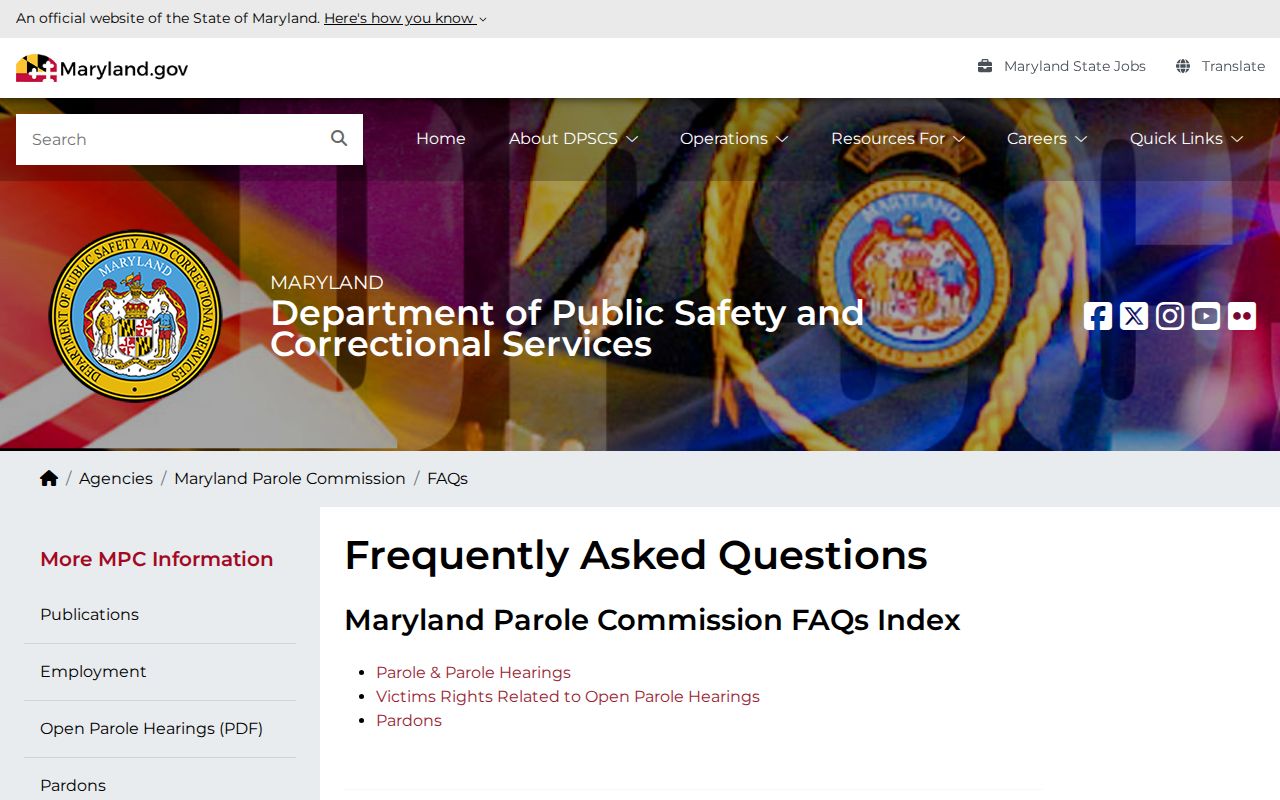
The distinction prevents a hearing outcome from being mistaken for a completed release or an active VINE supervision registration.
Federal Releases Need Separate Locators
Maryland VINE is not the federal Bureau of Prisons locator and not the ICE detainee locator. Use BOP for a federal sentenced prisoner. Its search covers federal records from 1982 forward and can retain former-prisoner entries with labels such as Released or Not in BOP Custody and a release date. BOP warns that dates can change. That result proves only the person’s relationship to BOP, not freedom from state, local, immigration, or supervision obligations.
The official BOP Inmate Locator is the correct federal fallback when Maryland VINE is the wrong system.
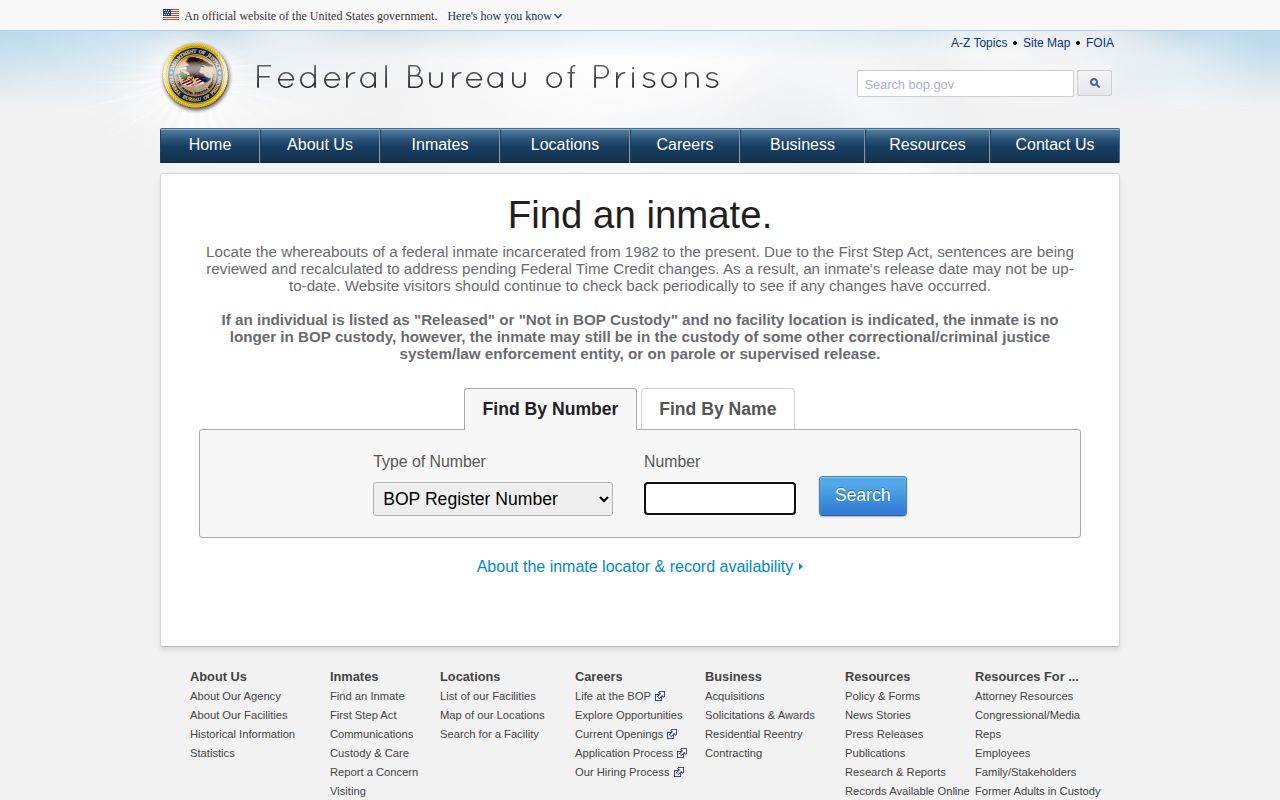
The federal locator keeps many former-prisoner results, unlike the Maryland DOC current-custody locator.
Federal pretrial defendants held for the U.S. Marshals may not yet have a useful BOP result. Use the federal court docket and the responsible custodial channel in that setting. When a jail exit may have been a transfer to civil immigration detention, use ICE’s Online Detainee Locator System with the required A-number or biographical data. ICE also has coverage limits, including for some recent processing and minors.
A state or county release does not rule out ICE custody. Likewise, Not in BOP Custody is not a nationwide release finding. Keep each search tied to its own custodian, date, and legal authority.